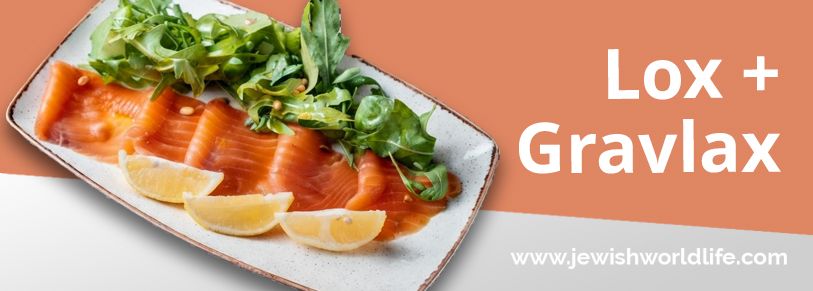
LOX + GRAVLAX
In Yiddish, lox comes from the word laks (לאַקס), which simply means salmon.
Traditional un-cured/uncooked lox is raw salmon preserved strictly through a heavy salt dry-cure or brine without any exposure to smoke or heat.
This authentic preparation yields a silky, translucent, and intensely salty fish that differs significantly from modern smoked varieties.
The difference between lox and gravlax: Both are raw, cured salmon, never cooked or smoked.
Lox uses only a salty liquid brine and comes exclusively from the salmon belly,
whereas Gravlax is a Nordic dry-cure style using salt, sugar, and fresh dill, often utilizing whole fillets.
Key Differences in Preparation and Flavor
- Lox
Cut: Made strictly from the fatty belly cut of the salmon.
Curing: Soaked in a simple, heavy salt brine.
Flavor & Texture: Extremely rich, silky, and very salty.
Tradition: Deeply rooted in Jewish-American deli culture (classic on a bagel with cream cheese). - Gravlax
Cut: Made from whole or center-cut salmon fillets, not just the belly.
Curing: Dry-cured with a rub of salt, sugar, and an abundance of fresh dill (sometimes boosted with aquavit, juniper, or citrus).
Flavor & Texture: Aromatic, sweet-and-salty balance, herbal from the dill, and milder in salt.
Tradition: Originates from Scandinavian countries, traditionally served with mustard-dill sauce on rye bread or crackers.
- Origin: Ashkenazi
- Homemade Lox Recipe
- Classic Lox Recipe
- Homemade Lox (Cured Salmon)
- Lox, Eggs and Onions Make the Perfect Jewish Breakfast
- GRAVLAX
Would you like to add YOUR recipe to our site?
Click here!
Click here!
We'd love to hear from you
What are your favourite types of LOX + GRAVLAX?
Do you have a special recipe you'd like to share?
We're interested in your family, ethnic, vegetarian, vegan or any comments that makes LOX + GRAVLAX a special food for you!